
What Are AI Smart Glasses and How Do They Work?
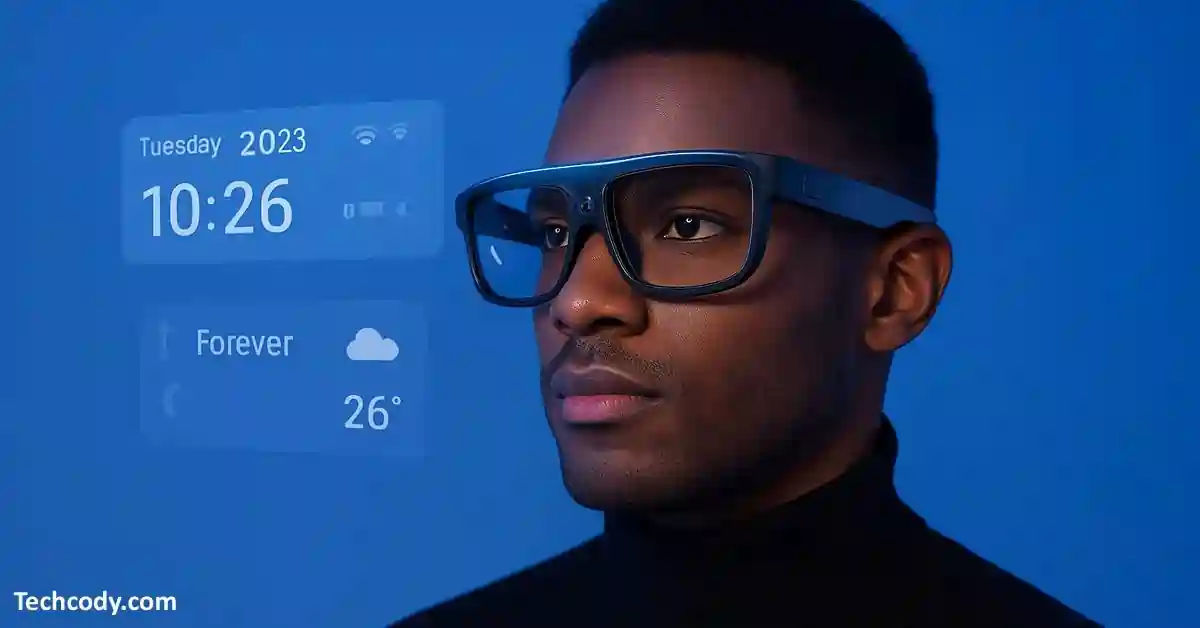
AI Smart Glasses are essentially a concept of eyewear. It’s a combination of artificial intelligence, augmented reality, and smart sensors. These intelligent sensors provide up-to-the-minute information and digital assistance in real-time. Firstly, we will get to know AI glasses, then figure out their operations. Eventually, find out how they are the most important wearable technology of the future.
What Are AI Smart Glasses
AI Smart Glasses utilize AI and computer vision to identify and comprehend the surroundings of the user and then take appropriate action. They are much more sophisticated than just a pair of smart glasses. The simplest things, such as showing notifications or recording video, can be done by these devices. They constantly assess the surroundings and give a response or deliver information that is cognizant of the situation. These glasses use a mixture of AI, AR, and voice recognition technologies to improve user interaction.
Key Features
- Real-time object and face recognition
- Translation and support – live
- Virtual assistant by voice command
- Recording photos/videos hands-free
- AR directions and data
AI Smart Glasses integrate digital intelligence with the real world to give users the freedom to interact with information.
How Do AI Smart Glasses Work
The capabilities of the AI Smart Glasses are highly dependent on a sensor, a camera, a processor, and software (powered by AI)
- Capture: Cameras and sensors take in the environment.
- Analyze: AI models pull out the data to deal with objects, faces, or languages.
- Respond: The system provides the next steps through hearing, seeing, or touching.
- Learn: AI interprets user habits and continuous interaction, thus it gets more personalized and accurate.
- Camera: Helps to record what is going on and can later be checked.
- Microphones: Users speak their commands, and mics pick up the sounds from the surroundings as well.
- Display or HUD: Let the users see the info that has been digitally changed, but is still in their line of sight.
- Processor: It can handle AI work locally or by a remote server.
- Battery: It is the source of power for the device to work better.
Most of the newly launched AI Smart Glasses are performing their functions via a mix of on-device and cloud-based processing.
Real-World Applications of AI Smart Glasses
AI Smart Glasses can be a beneficial tool in various sectors and situations that are part of daily life.
Translation and Accessibility
The glasses offer instant translation of text or speech; thus, they could be the perfect companions for travelers and individuals who are deaf or hard of hearing.
Industrial and Field Work
Technicians and engineers receive instructions on their devices and can even check with remote experts for help while their hands are still engaged in the work.
Navigation and Exploration
With the help of AI Smart Glasses, a user can be guided through the route when walking or driving without the need to look away from the road.
Education and Training
Learning becomes less of a struggle and more of an accomplishment, as the learners get the visual assistance for the parts of the system or are shown the subject task instruction.
Healthcare
Doctors may obtain patient records in no time or share the live view of the operation session for training or consultation.
Entertainment and Social Use
Consumers are able to dive into the world of AR entertainment or simply live broadcast what they are seeing directly to social networking sites.
Benefits of AI Smart Glasses
- Information retrieval does not require any manual intervention.
- Help is provided with an understanding of the context.
- Ability to carry out more tasks in a lesser time.
- Users with disabilities get support in accessing services.
- Greater integration with smart ecosystems is also possible.
Challenges and Limitations
Even after promising so much, AI Smart Glasses still have some drawbacks.
- Privacy Issues: The existence of both visual and audio recording units generates apprehensions about data security.
- Battery Life: The limited size of the device is what restricts the energy source.
- Design Limitations: The combination of technology with style and comfort has been a challenge.
- Cost: The present models are still beyond the reach of most people.
- App Support: The low number of apps can limit the functionalities of the device.
Future of AI Smart Glasses
The next generation of AI Smart Glasses is expected to be smaller, faster, and less reliant on a smartphone.
Main features are:
- More efficient use of battery and smaller AI chips
- Functionality that is fully independent with no need for a phone
- Improved computer vision for recognizing gestures and objects
- More attractive, fashion-oriented, and ergonomic designs
- Compatibility with smart home and internet-connected gadgets
Big technology players such as Meta, Google, Apple, and Xiaomi are putting a lot of their resources into the creation of AI-powered glasses, which is a major indication of a bright future for this part of wearable technology.
Conclusion
AI Smart Glasses are going to be the next generation of personal computing. They integrate artificial intelligence, real-world perception, and augmented reality to facilitate the transition from the physical to the digital world.