
NASA Moon Base Plan: 3 Pioneering Lunar Phases of Discovery
What Is NASA’s Moon Base Plan?
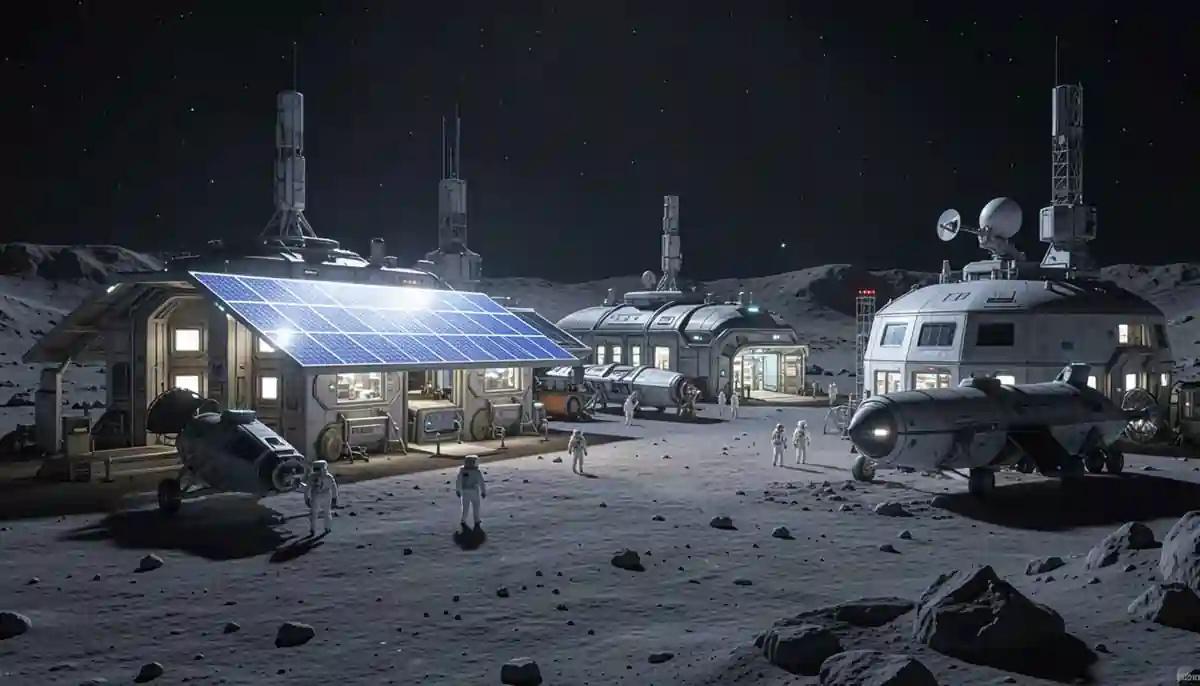
Right now, space agencies around the world are preparing for a major return to the Moon. This time, the goal is not just to visit — it is to stay there for longer periods.
The Moon Base Plan announced by NASA represents one of the most ambitious space projects of the modern era. Instead of short visits like in the past, the new goal is to create a long-term human presence on the Moon.
This project is part of the larger Artemis Program, which aims to send astronauts back to the Moon and represents a major step in future space technology. It will eventually build infrastructure that allows humans to live and work there for extended periods.
With an estimated investment of around $20 billion, this Moon Base Plan could change how humans explore space. It may even become the foundation for future missions to Mars.
Why NASA Wants a Permanent Moon Base
During the era of the Apollo Program, astronauts only stayed on the Moon for a few days. Today, the vision is very different.
NASA wants to create a base similar to scientific stations found in extreme environments like Antarctica. Instead of short visits, astronauts could live on the Moon for months at a time. During these longer stays, they would conduct research and test technologies needed for deep space travel.
There are several practical reasons behind this ambitious move:
- To study the Moon in greater detail
- To test long-term survival systems
- To prepare for future missions to Mars
- To develop new space technologies
A permanent base would allow scientists to conduct experiments that were never possible during short lunar visits.
The Three Phases of the Moon Base Plan
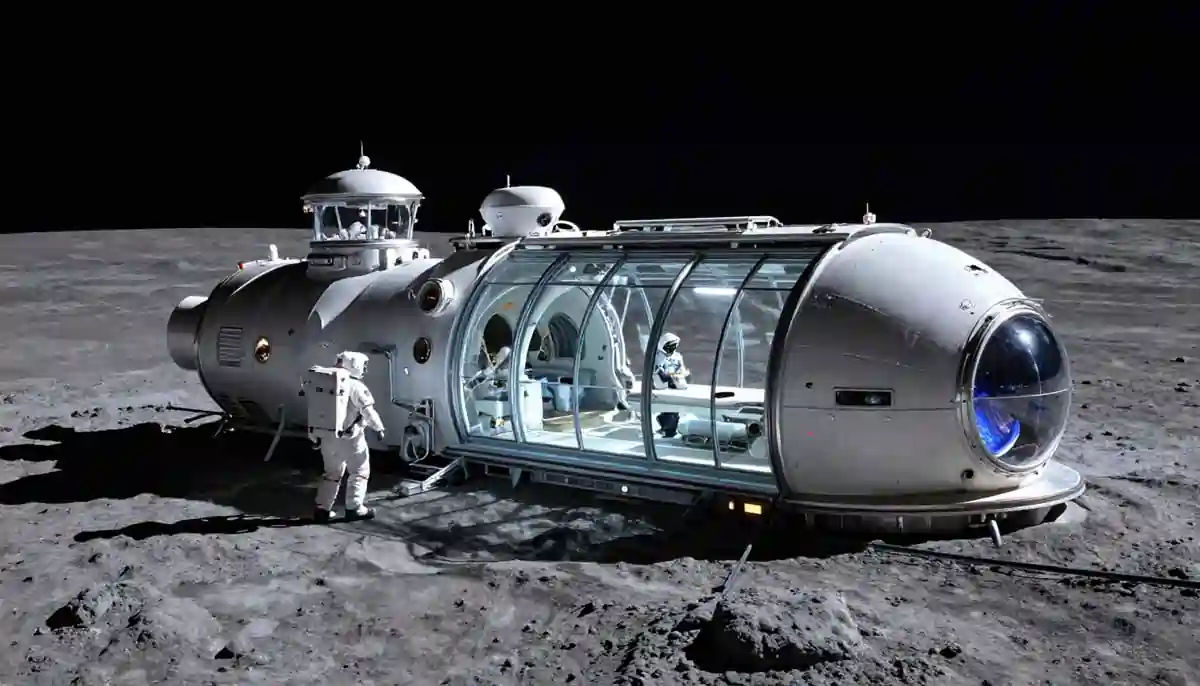
NASA’s Moon Base Plan is expected to be completed in three major phases, each building on the success of the previous one.
Phase 1 — Returning Humans to the Moon
The first phase focuses on safely returning astronauts to the lunar surface after decades of absence.
NASA is using advanced spacecraft such as:
Space Launch System — a powerful rocket designed to carry large payloads.
Orion spacecraft — built to transport astronauts beyond Earth’s orbit.
During this stage, missions will test landing technologies, safety systems, and equipment needed for future operations. This phase is essential because it rebuilds the ability to send humans to the Moon, something that has not been done since the early 1970s.
It also focuses heavily on testing safety, reliability, and landing accuracy before moving to later phases.
Phase 2 — Building Lunar Infrastructure
Once astronauts successfully return to the Moon, the second phase focuses on building support systems.
One of the key projects is the Lunar Gateway. This orbital station acts like a support hub between Earth and the Moon, making repeated missions more efficient.
This station will serve several purposes:
- A staging point for Moon landings
- A supply storage center
- A communication hub
- A shelter for astronauts traveling to and from the surface
In addition to the Gateway, NASA plans to develop power systems, communication tools, and transportation methods. These systems will support longer missions and make lunar operations more reliable.
Phase 3 — Creating a Permanent Moon Base
The final phase of the Moon Base Plan involves building a long-term lunar habitat on the Moon’s surface.
Instead of short stays lasting only a few days, astronauts could live there for six months or more. This would be similar to how crews operate on the International Space Station.
The base may include:
- Living quarters
- Scientific laboratories
- Storage facilities
- Power generation systems
- Surface vehicles
Over time, more modules could be added. This allows the base to expand gradually rather than being built all at once.
Why the Moon’s South Pole Is Important
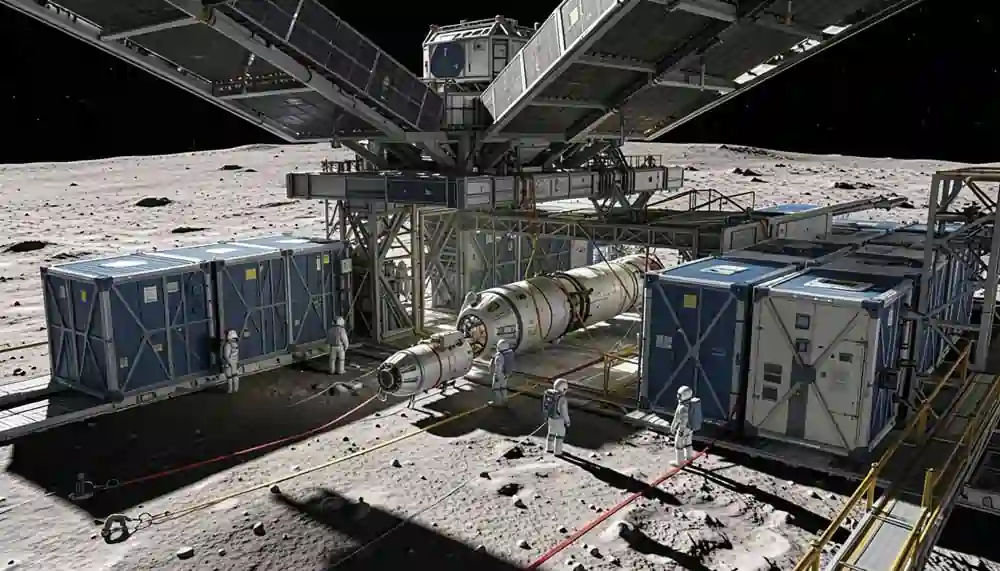
Many experts believe that the best location for a Moon base is near the Moon’s south pole. This region is especially valuable because it is believed to contain water ice trapped in permanently shadowed craters.
Water ice is extremely important in space because it can be used to:
- Produce drinking water
- Generate oxygen
- Create hydrogen fuel
Having access to water resources would make long-term missions more sustainable and reduce the need to transport supplies from Earth.
Global Competition and the New Space Era
The Moon Base Plan is not happening in isolation. Other nations are also planning lunar missions.
Countries such as China and Russia, along with several private companies, have announced their own plans to explore the Moon and possibly build lunar bases in the future.
Some experts describe this period as a new space race, although it is more collaborative than the competition seen during the Cold War. International partnerships and private companies are expected to play major roles in this new era of exploration.
The Cost of Building a Moon Base
Space projects at this scale require massive funding. Building a lunar base is extremely expensive, but the estimated $20 billion cost is spread across many years.
When compared to other large national projects, experts believe the investment is reasonable for the potential benefits.
These benefits include:
- New scientific discoveries
- Technological innovation
- Economic opportunities in space industries
- Inspiration for future generations
Many of today’s everyday technologies were originally developed through real-world space technology innovations.
How Long Will It Take to Build the Moon Base?
Although NASA has ambitious timelines, building a permanent Moon base is a complex challenge.
Experts believe:
- Initial operations could begin within 7–10 years
- Full habitability may take 10+ years
- Expansion will continue over decades
Just like the International Space Station, the Moon base will likely start small and grow over time.
How This Moon Base Could Lead to Mars Missions
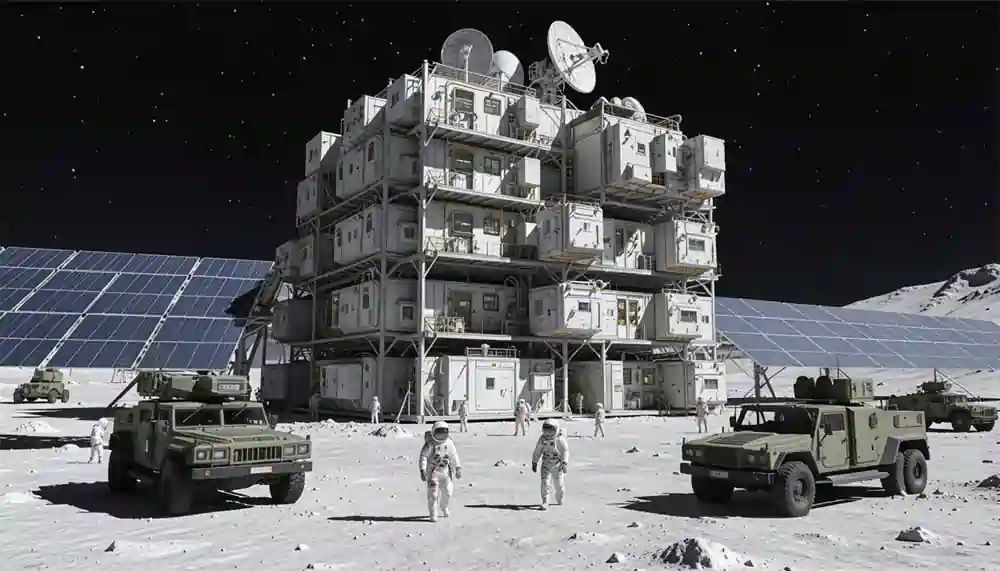
One of the biggest goals behind the Moon Base Plan is preparing humans for future missions to Mars.
Living on the Moon allows scientists to test:
- Life support systems
- Radiation protection
- Space habitats
- Long-duration missions
These experiments often inspire innovative solutions similar to projects like walking electricity technology, where human activity is used to generate useful energy.
These technologies are essential before attempting the much longer journey to Mars. The Moon acts as a training ground for humanity’s next major step in space exploration.
This is where the Moon becomes more than just a destination.
Why This Moon Base Plan Matters for the Future
NASA’s Moon Base Plan is more than just a space mission — it represents a shift in how humans approach space exploration.
Instead of short visits, the focus is now on long-term presence beyond Earth.
If successful, this project could:
- Change how humans live in space
- Create new industries
- Advance scientific knowledge
- Bring humanity closer to becoming a multi-planet species
This is why many experts consider the Moon Base Plan one of the most important space initiatives of the 21st century.
Challenges NASA Still Needs to Solve
- Protecting astronauts from radiation
- Managing extreme temperature swings
- Transporting materials from Earth
- Building structures in low gravity
FAQs — Moon Base Plan
What is NASA’s Moon Base Plan?
NASA’s Moon Base Plan is a long-term strategy to establish a permanent human presence on the Moon. It begins with sending astronauts back and eventually building a fully functional lunar base for research and deep space missions.
When will NASA build the Moon base?
Timelines depend on technology development and funding. Initial missions are expected in this decade, while a fully operational base may take around 10 years or more.
Are other countries planning Moon bases?
Yes. Nations such as China and Russia are actively working on lunar programs, and several international partners are also planning long-term lunar exploration missions.
Will the Moon base help future Mars missions?
Yes. The Moon will act as a testing ground where technologies and survival systems can be refined before attempting long-duration missions to Mars.