How Artificial Intelligence Is Changing Everyday American Life
Understanding – How Artificial Intelligence Is Changing Everyday
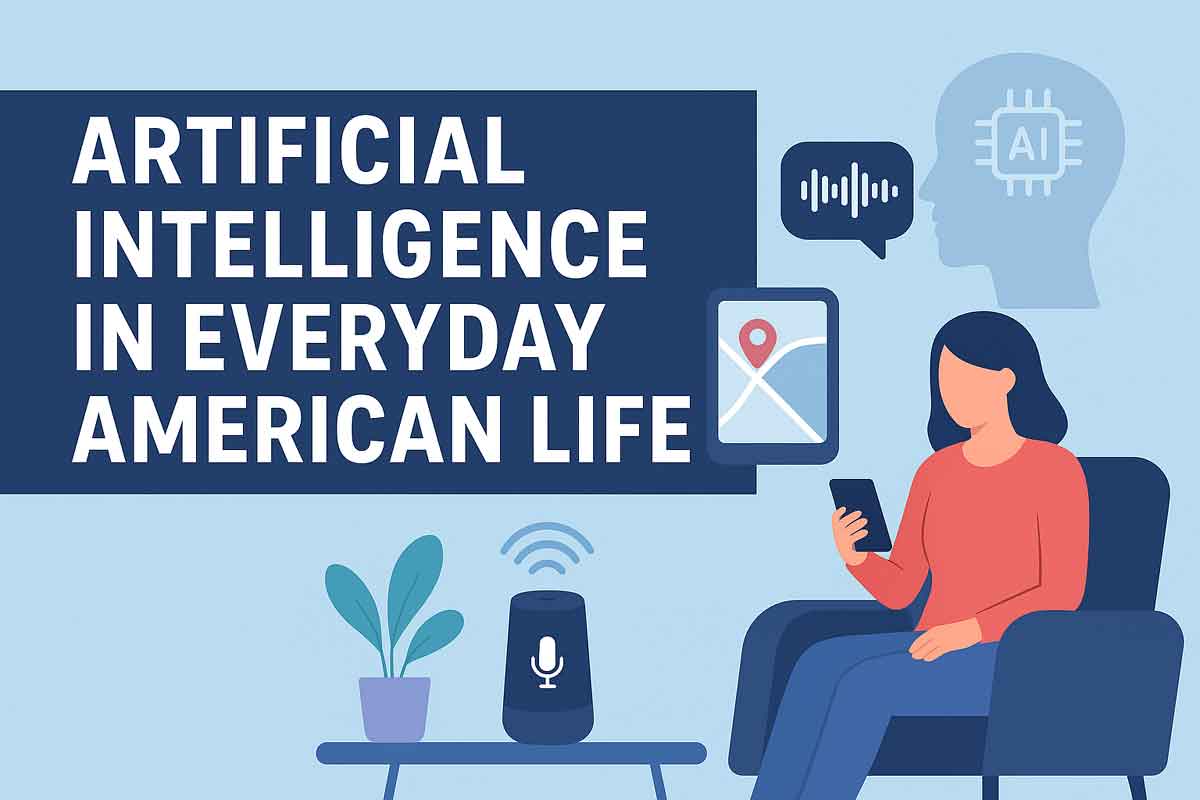
How Artificial Intelligence Is Changing Everyday American Life – Artificial intelligence affects daily life in America, even if its role is debated. Is it just another tech tool?. Is AI just another tech tool? Is it more like a social actor, or maybe something that changes how we relate to each other? Researchers keep debating this stuff. Some folks talk up the efficiency and convenience AI brings, while others warn about tangled ethical, social, and economic problems hiding under the surface. The bottom line: you can’t just look at AI as a neutral gadget. It’s wrapped up in bigger social and technical systems.
Smart Homes and Domestic Change – Convenience Meets Privacy
The Smart home tech is everywhere now. Voice assistants like Alexa and Google can handle your reminders that make life easier and save a lot of time. But privacy is still there. Who’s actually looking at all that data these devices collect? What do they do with it? These aren’t just distant problems; they shape how people run their homes every day. Even if the tech feels pretty neutral, it quietly shifts how families split up chores and make decisions together. Researchers say you can’t ignore how AI changes the way families work and interact, even if it’s subtle.
To explore: how AI is revolutionizing sleep
Transportation and Automation – Promises and Responsibilities
Transportation is another big one. We hear about self-driving cars, smarter navigation, and AI that helps manage traffic. The promise? Fewer mistakes, smoother commutes, maybe even fewer accidents. There’s research suggesting real safety benefits, but nobody’s figured out who’s responsible if something goes wrong. Greater trust in automation also shapes cities, jobs, and public confidence. AI in transportation is not only about better technology. It connects with laws, policies, and how much people trust these systems.
Healthcare and Ethical Challenges – The Promise of Smarter Care
Healthcare brings its own set of promises and headaches. AI helps with diagnoses, tracks your health through wearables, and organizes patient records. Your smartwatch might catch something early — that’s huge. Here’s a professional, concise version in short.
Explore: AI applications in healthcare
Trust and Responsibility
However, these systems rely on large amounts of data. Sometimes the data exclude certain groups or contain hidden biases. This raises ethical concerns. Who is responsible for errors? Do patients fully understand how their data is used? Can doctors trust the algorithms? Researchers say AI doesn’t just make healthcare more efficient. It shifts trust, changes how decisions get made, and forces everyone to rethink responsibility.
Work and Education in Transition – Productivity and Job Change
To explore: AI in CMS development
Work and school aren’t immune, either. Offices use AI for everything from scheduling to drafting documents. As Productivity goes up, job expectations change too. In classrooms, adaptive learning tools promise to meet students where they are. But there’s still real debate: Do these systems limit creativity? Could they deepen inequalities for students who are already behind? So AI isn’t just helping out in the background but also reshaping how we work and learn.
AI has also changed how we spend our free time. Streaming platforms and social media use algorithms to hold attention. These systems shape public dialogue and affect how people absorb information.
Read: Ethical concerns in AI
Conclusion
So how Artificial Intelligence is changing Everyday in American Life is more than technology or data. It is about how we use it responsibly. Innovation matters, but so does protecting what is important. AI’s future depends not only on its abilities but also on how we design, apply, and understand it.