
Walking Electricity Technology in Japan Explained Clearly

Imagine if you could generate power simply by walking. No wires, no batteries, no fuel – purely walking. Such an idea may seem like a fantasy. In fact, Japan has already piloted the concept of producing electricity from human footsteps. The underlying principle behind this system is piezoelectric energy harvesting.
This technology has been tested experimentally in densely populated areas such as train stations, shopping districts, and public walkways. As urban spaces continue to fill up and the demand for energy grows, it is possible that footstep-powered energy systems could become part of future smart cities.
In this article, we will discuss the working principle of Japan’s walking electricity technology, identify where it is used, and highlight its benefits and limitations.
What Is Walking Electricity Technology?
Walking electricity technology is also known as piezoelectric energy harvesting, a method that converts mechanical pressure into electrical energy.
Walking electricity technology is essentially a device that converts the kinetic energy exerted by a footstep into electrical energy. Consider walking as an example. Your body weight causes a force through the floor. If the floor is engineered so that special materials or detectors can sense the force, then the application of the force results in the production of a tiny electric charge. This electricity can be gathered and stored in a battery.
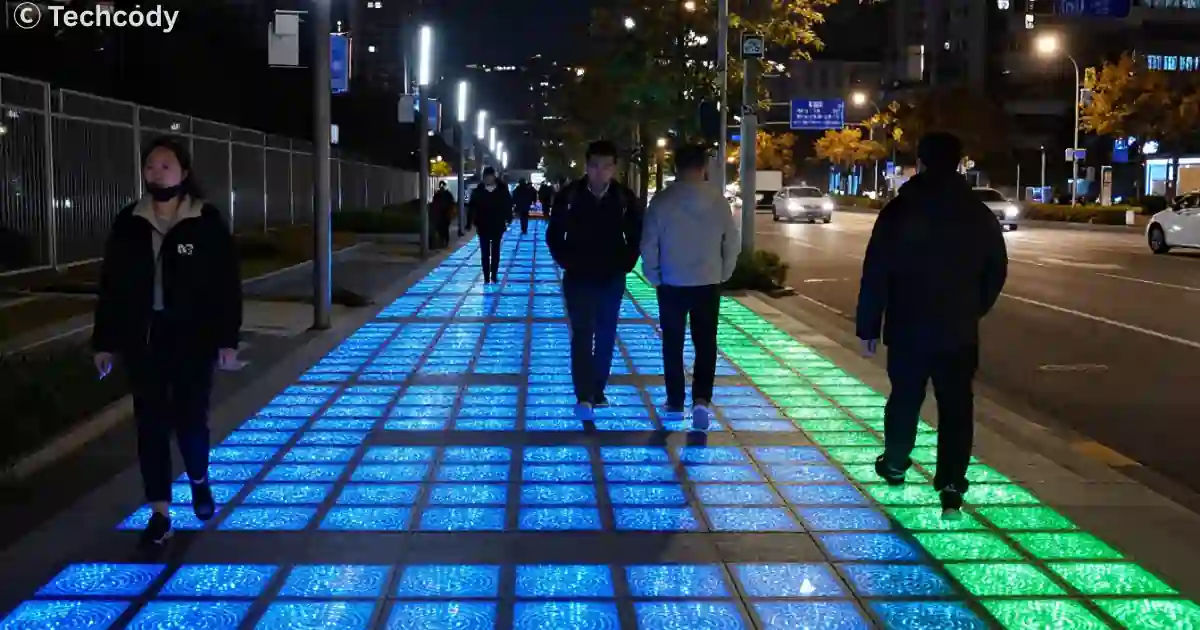
In Japan, engineers created a prototype for this system in the form of energy-producing floor tiles that generate power whenever a person steps on them. These installations are intended primarily for areas with heavy foot traffic. When people walk, more electricity is generated automatically.
How Piezoelectric Technology Works
Quick Fact:
Most piezoelectric floor tiles generate only a few milliwatts of electricity per step, but large crowds can produce usable power for small devices.

At the heart of walking electricity technology is something called piezoelectric materials. These materials have a special property: When the pressure is applied, they generate electricity.
Here’s how the process works:
Step-by-step process
Step 1: A person steps on the tile.
Step 2: The tile compresses under pressure.
Step 3: Sensors generate an electrical charge.
Step 4: Energy powers small devices.
Even though one step produces only a minute amount of electricity, when thousands of people move over the surface, the total output becomes significant.
Real-World Experiments in Japan
Some experimental installations recorded thousands of footsteps per day, demonstrating how crowd density directly affects power generation levels.
Japan has long been a pioneer in the field of footstep-generated electricity. Energy-generating floor systems have been experimented with at:
- Busy railway stations, such as those in Tokyo, where pilot installations have been tested in major transit hubs
- Commercial shopping districts
- Public walkways
In busy transportation centers, these tiles can produce enough power to run:
- LED lighting
- Digital signs
- Small electronic displays
These trials are part of Japan’s long-term plan to develop smart infrastructure and promote sustainable energy solutions.
Notable Real-World Use Cases in Japan
Tokyo Station
One of the most well-known demonstrations of walking electricity technology took place at Tokyo Station, one of Japan’s busiest railway hubs. Energy-generating floor tiles were installed in selected areas where thousands of commuters pass daily. The electricity generated from footsteps was used to power small devices such as LED lighting and information displays, demonstrating how high-traffic locations can support renewable micro-energy generation.
Shibuya Station
Another important experiment was conducted at Shibuya Station, famous for its extremely heavy pedestrian movement. Engineers tested how thousands of footsteps during peak hours could generate measurable electrical output. The results helped researchers understand how urban crowd density directly influences energy production in piezoelectric floor systems.
Tokyo Big Sight
Walking electricity systems were also showcased at Tokyo Big Sight, one of Japan’s largest event venues. During technology exhibitions and public demonstrations, energy-harvesting floor tiles were installed to showcase how large gatherings can generate electricity collectively. These demonstrations helped raise public awareness about renewable energy and smart infrastructure technologies.
Advantages of Footstep Energy Technology
Walking electricity technology offers several interesting benefits.
Renewable and Clean Energy
Generating energy from footsteps is a method that doesn’t require fuel, sunlight, or wind. This captures kinetic energy from human motion that would normally go to waste, making it environmentally friendly and sustainable in the long run.
Works in Crowded Cities
There is a huge difference between this technology and that of solar or wind power. To function at its best, it requires a high density of people in the urban environment.
Cities with:
- High population density
- Heavy foot traffic
- Busy transport hubs
These are ideal locations for installing such systems.
Educational and Awareness Value
Besides supplying power, these systems serve as tools for energy education. Displaying people’s footsteps transforming into electricity is an engaging way to get them interested in renewable energy technologies.
Limitations of Walking Electricity Technology
While the idea sounds powerful, there are several important limitations. Understanding these limitations helps create realistic expectations.
Very Low Energy Per Step
For example, thousands of footsteps are usually required to power even a small LED light continuously.
Each step generates only a small amount of electricity — usually measured in milliwatts.
This means:
- It cannot power homes
- It cannot replace traditional power plants
- It is suitable mainly for small-scale uses
High Installation Cost
Energy-generating tiles are more expensive than regular flooring.
Costs include:
- Specialized materials
- Sensors
- Wiring
- Storage systems
That is why this technology has been largely limited to pilot projects rather than functioning as an element of major installations.
Maintenance Challenges
These tiles must be able to resist:
- Heavy foot traffic
- Weather exposure
- Constant pressure
In order to maintain their operation standards, regular servicing is necessary.
Future Potential of This Technology
Despite its current limitations, walking electricity technology has strong future potential. It could be commonly used in the following locations:
Smart Cities
Future smart cities may include:
- Energy-generating sidewalks
- Public plazas
- Smart pedestrian crossings
This means cities could produce small amounts of electricity on their own using this method.
Airports and Railway Stations
These locations are ideal because:
- Thousands of people walk there daily
- Lighting and displays are always needed
- Space is limited for solar or wind energy
Shopping Malls
Retail centers could use walking electricity systems to power:
- Decorative lighting
- Advertising displays
- Information kiosks
Stadiums and Event Venues
Major events naturally produce very large numbers of people walking, which means electricity generated from walking could be used in these settings very effectively.
Walking Electricity vs Solar and Wind Energy
Understanding the respective merits of walking electricity when placed alongside other renewable energy types might illuminate its true value.
| Feature | Walking Electricity | Solar Energy | Wind Energy |
|---|---|---|---|
| Power Output | Low | Medium to High | High |
| Installation Cost | High | Medium | High |
| Space Required | Low | Medium | High |
| Best Location | Crowded Areas | Sunny Regions | Windy Regions |
| Reliability | Depends on Foot Traffic | Depends on Sunlight | Depends on Wind |
It’s interesting to see from this that walking electricity should NOT be seen as a substitute for solar or wind but rather as an additional energy source.
Why Japan Is Leading This Innovation
Japan’s interest in walking electricity technology comes from several factors:
High Urban Population
Japan has densely populated cities where millions of people move daily. This creates ideal conditions for footstep energy systems.
Focus on Smart Infrastructure
Japan is a major investor in technologies that make cities more livable and green.
For example:
- Advanced means of transport
- Green buildings
- Automated infrastructure systems
Walking electricity fits perfectly into this long-term strategy.
Limited Natural Resources
Japan is an energy-importing country. Therefore, Japan actively explores both large-scale and small-scale alternative energy sources, including piezoelectric floors.
Is Walking Electricity the Future?
Walking electricity technology is unlikely to replace major energy sources, but it has an important role in the future of urban design.
Its real strength lies in:
- Meeting small-scale energy needs
- Ensuring efficient use of energy
- Supporting smart infrastructure
We might witness several cities trying out energy-generating surfaces as tech evolves and prices drop. This, even if it only produces minuscule quantities of electricity, is a symbolic and ingenious use of otherwise wasted energy.
Key Applications of Walking Electricity Technology
Public Infrastructure
Walking electricity systems can be installed in walkways, transport hubs, and pedestrian crossings to power lighting and displays.
Commercial Buildings
Shopping malls and offices can use these systems to power decorative lighting and digital signage.
Smart City Projects
Smart cities may integrate energy-generating walkways to support small-scale power needs.
Final Thoughts
The technology of making electricity through walking is a good example of the transformation of the most common human action into a source of energy. Japan’s trials with piezoelectric floors are proof that even a basic action like walking can be a source of sustainable energy.
Nonetheless, this technology is still at a stage where it has to overcome the issues of cost and efficiency. Still, it highlights a major trend in contemporary engineering — generating power in environmentally friendly ways.
One day, your routine passage through a railway station or mall may silently operate lights, advertisements, or sensors – without a single thought on your part. That is exactly what makes this technology highly innovative.
Although still experimental, walking electricity technology shows how small energy sources can contribute to smarter and more efficient cities.